Climate Communications Toolkit

Summary
The 2025 Britain Talks Climate & Nature Communications Toolkit is designed as a practical, quick-start resource to support effective public engagement on climate, nature, and energy issues across the UK. Developed as part of the wider Britain Talks Climate & Nature initiative, the toolkit translates research and public sentiment into clear, actionable guidance for communicators, policymakers, community groups, and practitioners. While the broader project includes an in-depth insights report, this toolkit focuses specifically on providing accessible messaging frameworks, evidence-based communication strategies, and topic-specific advice to help users navigate conversations with diverse audiences and build more inclusive, constructive dialogue.
Key topics
The toolkit is broken down into several topic areas. Each section provides guidance on how to talk about a particular theme.
- Climate change and nature – The toolkit provides guidance on how to link climate action with nature protection, emphasize collective benefit, and frame narratives in a way that resonates broadly.
- Net Zero – The toolkit provides messaging advice that emphasizes future gains and tangible benefits (cleaner air, health, local improvements) rather than just target/statistics language.
- Renewable energy policy and infrastructure – The toolkit provides advice on how to speak about clean energy development – including how to handle public concerns, emphasize progress, jobs, and honest framing about transitional changes.
- Energy in the home – The toolkit provides communicators with strategies to frame household/clean-energy conversations empathetically, and to make the benefits relatable.
- Adaptation and mitigation – The toolkit provides guidance on how to explain these concepts clearly, integrate both in the messaging, avoid framing them as competing options.
- Consulting people on climate change and nature – The toolkit provides tools and recommendations on how to consult and engage public audiences meaningfully, inclusively, and transparently – including segments that might feel alienated.
- Political leadership – The toolkit focuses on how to talk about leadership on climate/nature issues — ensuring that support is normalized, ambitious action is rooted in community needs, and opposition or trust issues are addressed carefully.
What the toolkit provides?
For each topic, the toolkit offers:
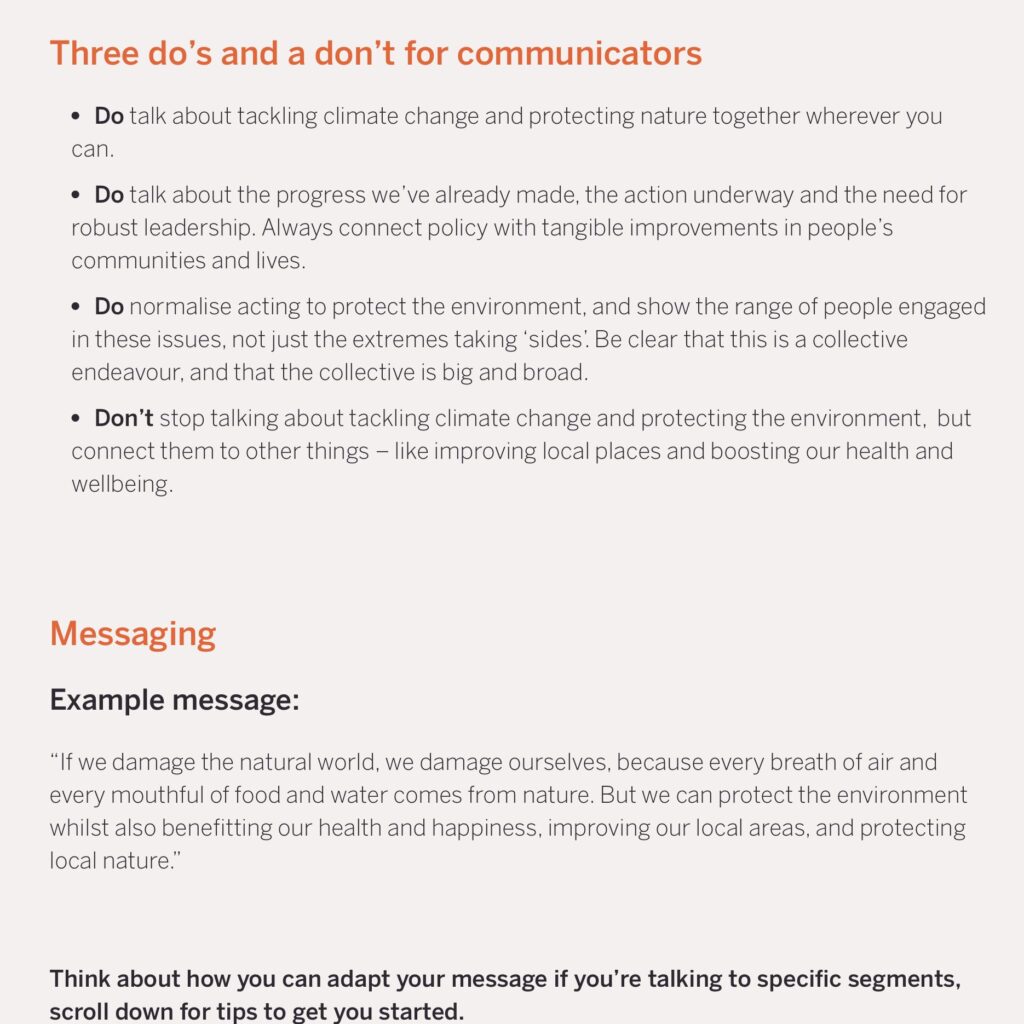
Three dos & a don’t: Clear guidance on what communicators should focus on and what to avoid in their messaging.
Example key message(s): Each topic includes sample language or narrative examples that can be adapted to different contexts. (E.g. net zero, clean energy, adaptation & mitigation)
Tailored advice for segmented audiences: The toolkit breaks down audiences into specific segments (based on values, beliefs and worldviews) and provides guidance on how to adapt messages for each. For example: Progressive Activists, Incrementalist Left, Established Liberals, Sceptical Scrollers, Rooted Patriots, Traditional Conservatives, Dissenting Disruptors
Framing and context guidance: Across sections, advice includes how to connect climate/nature issues with people’s daily lives, community benefits, progress and fairness, rather than relying purely on technical or statistical arguments.
Who is the toolkit for?
The toolkit is designed for anyone involved in public engagement on climate and nature issues, including communications professionals, policymakers, local authorities, community groups, educators, advocacy organisations, and media practitioners. It supports users in crafting tailored messages, designing inclusive consultations, and developing outreach materials that resonate with diverse audiences. Whether used to shape community engagement around clean-energy projects, create accessible communications on home-energy improvements, train staff or volunteers in audience-savvy messaging, or inform policy briefings on adaptation, mitigation, and net zero, the toolkit offers practical, evidence-based guidance that can be applied directly to real-world conversations and decision-making contexts.
What it can be used for?
The toolkit can be used to support a wide range of communication and engagement activities related to climate, nature, and energy. It offers practical guidance for framing messages, structuring conversations, and designing consultations that resonate with different audience groups. Users can draw on the toolkit to develop public-facing materials, facilitate community discussions, inform local or national policy engagement, and strengthen outreach around issues such as net zero, clean energy, adaptation, and nature protection.
Further resources


Comments
There is no content