
Youth visions for a climate-resilient future

Introduction
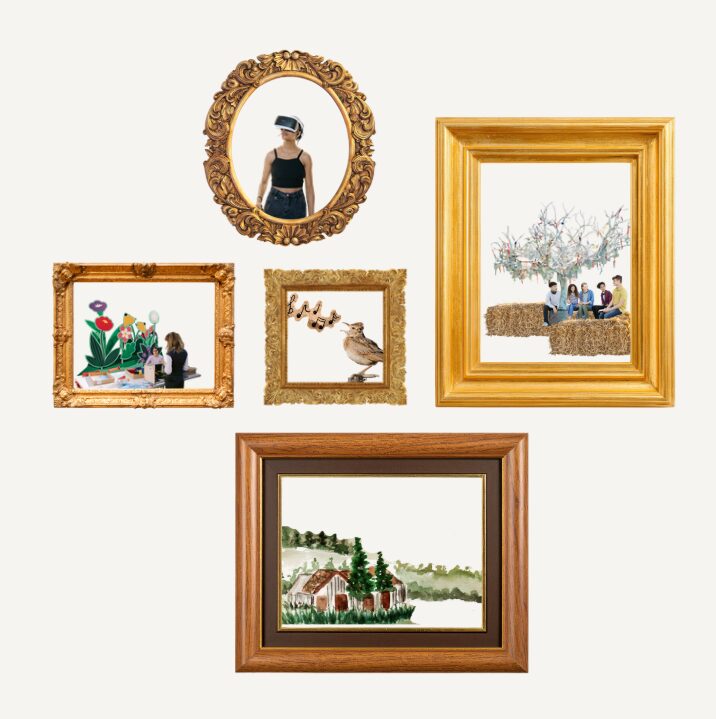
This article showcases the shortlisted artworks from DIRECTED and Helikon Art Festival’s ‘Our Resilient Future’ exhibition. These works were created by young people aged 12–21 in response to a collaborative open call, asking: How can creativity help show what a climate-resilient future looks like in your community?
Across Europe, young artists responded with imagination, honesty, and hope. Through paintings, illustrations, poetry, short stories, and other creative forms, they explore how communities might prepare for and adapt to the growing impacts of climate change.
Explore the youth visions for a climate-resilient future through the series of artworks below, and vote for your winner!
Now is Our Tomorrow
By Diego | Portugal
As a 17-year-old, I often feel that my generation is living in a paradox when we are told we are the “future”, yet, we are inheriting a planet that is losing all its life, I have an increasingly strong feeling that we are inheriting a relic of the past that is losing its natural essence over the years. This poem, “Now is Our Tomorrow,” was born from the friction between the beauty of the world I see and the cold reality of the climate reports I read and facts I see.
My creative process began with a feeling of injustice. I wanted to move away from the abstract numbers of climate change and focus on sensory loss. When I write about a “seed that forgot how to grow” or “plastic pretending to be fish”, I am trying to translate environmental collapse into a language that hurts, because only when we feel the sting of loss do we truly move toward action and this is so sad.
The central metaphor of the poem, that Earth is a loan from our children, is what drives my principal message. I chose to use a tone that balances indignation with a sense of hope because I believe that art has a role that science cannot always fill, it can bypass the intellect and strike the heart so deep. For me, writing this was not just an artistic exercise but an important act of citizenship. In this competition, my goal is to show that youth are not just waiting for their turn to lead, we are literally here, feeling the heat of the sun and the weight of the smoke who travels through the air we breathe. I want the reader to finish this poem not with a sense of defeat, but with the realization that the emergency is not a distant date on a calendar, it is happening right now and this catastrophe is so real. It is our present and we have all the answers and the facts in our faces, we just need the courage to act on them before our “tomorrow” becomes a memory of what could have been.
The Deluge of Denial
By Alice | Italy
This work is an allegorical story created to give a face and a body to scientific data on climate change. Instead of using statistics, I chose to use metamorphosis as a narrative tool to break down the wall of indifference that often surrounds the environmental crisis. The work represents the clash between human arrogance and the Earth’s fragility. The protagonists of the story symbolize that part of society which, driven by profit or denialism, feels “separate” from nature, as if living in an untouchable bubble. Their physical transformation into natural elements (trees, earth, mud) represents a forced return to our roots: it is the demonstration that there is no “us” and “them,” but that we are one single organism.
Planting a Seed
By Susi | Armenia
In this painting, a boy is planting a seed into the ground. At first, it looks like a small and ordinary gesture, but it carries a deeper meaning. The roots of the plant grow deep into the earth and spread into different areas affected by global problems such as deforestation and environmental damage. Even though these problems are serious, the roots act as something healing rather than destructive. The painting shows the idea that even a single small action can have a wider impact on the world. The boy represents hope and a new generation that believes change is still possible.
Resilience, on All Levels
By Veronika | Austria
To me, climate resilience should be about more than being aware, prepared for, and resilient to the natural disasters caused by climate change and global warming. It is more (or should be more): about the inner resilience of people too.
People will only act and change if they are not fearful. Fear paralyses. More fear causes a reluctance to act. I observe that this is what is already happening with many, decision-makers and everyday-people alike. With inner resilience this fear could be tackled.
My vision for a climate prepared future is one in which states, communities, individuals are prepared on both levels: outside and inside, physically and psychologically. A lot can be rebuilt, but the emotional is more vulnerable to not being rebuilt because one cannot see it, because it is an issue of multiple overlapping and intertwining layers.
In my community many are hopeless, have become indifferent, and feel that they cannot cause a change. But they can. With a strong inner resilience, they would.
The piece should tell the story that only together – system resilience and inner resilience – we can be truly climate resilient. And this includes solving the issues as they come, solving the causes of the issues, and setting the stage successfully for the future generations to come. Allowing for new winds to blow.
Lasting Together
By Nikola | Czech Republic
My artwork presents a vision of a climate-resilient future that goes beyond technology and infrastructure. It focuses on the fundamental pillars of resilience: peace, empathy, and the restoration of the bond between humanity and the natural world. In a future reshaped by climate change, true resilience is defined by our ability to maintain social harmony and protect the delicate ecosystems we inhabit.
The monochromatic blue palette is a deliberate choice. It symbolizes a “cooled” world—a planet where we have successfully stabilized temperatures and purified our atmosphere. This dominant blue tone connects every element of the painting, suggesting that in a resilient future, there is no longer a divide between “us” and “nature”; we are part of one single, interconnected system.
The central figure, an elderly man resting on a bench, represents humanity’s transition from a consumer of resources to a humble guardian of life. The pigeons surrounding him are not merely part of the scenery; they are allegories for different aspects of our climate-resilient journey:
- The bird held gently in the man’s hands represents our active responsibility toward biodiversity. It shows that we have chosen to protect and cherish the species that were once on the brink of extinction.
- The birds at his feet symbolize the successful integration of wildlife into our urban living spaces. It shows a future where cities are no longer concrete jungles, but shared habitats where humans and animals coexist in safety.
- The birds in the soft background represent hope and the future generations who will inherit this balance.
This scene is a reminder that a truly resilient future is one where we have preserved the quality of life. It is a world where we can still find time for a quiet moment on a park bench, sharing the earth in peace with all living beings. We are not just surviving the change; we are lasting together.
Vote for your winner
All shortlisted artworks will be showcased at the Helikon Arts Festival in Hungary, with voting taking place between 13-17 April. The winner will be announced at the closing ceremony on the 18 April.
Further resources








11 young climate leaders on how today’s youth can make a difference
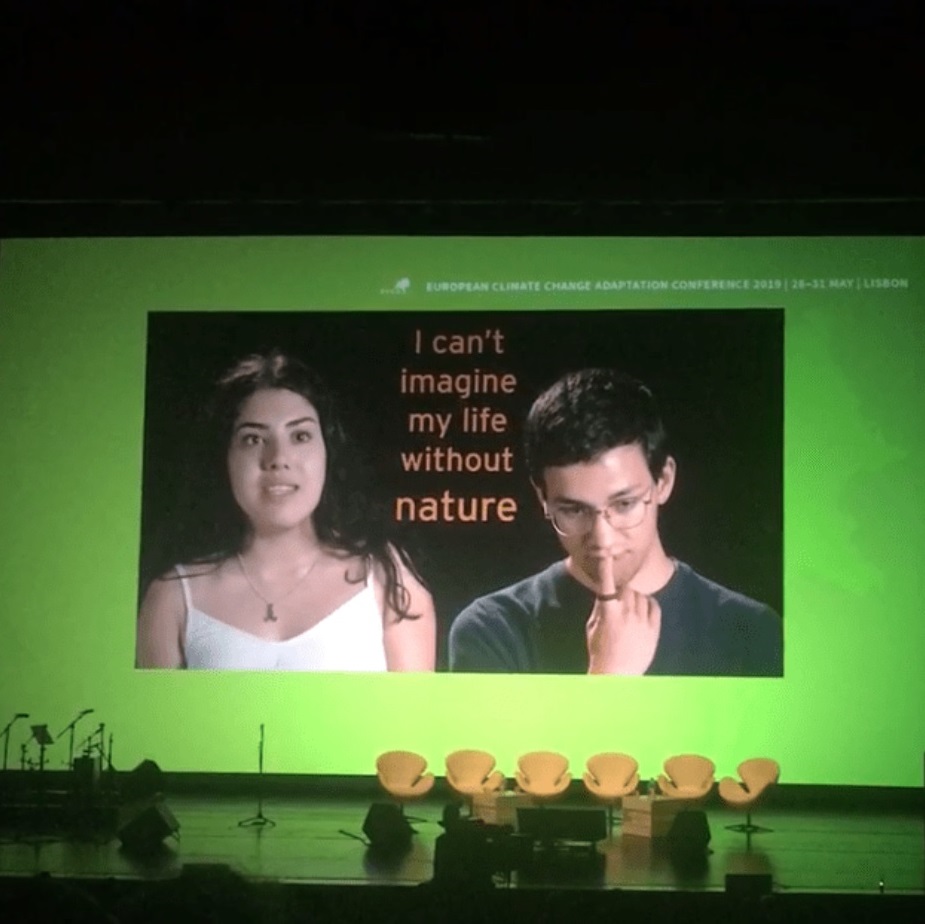
A youth’s call for climate action – “Young Voices” video project


Creating youth climate councils: A step-by-step guide for young people

Comments
There is no contentYou must be logged in to reply.